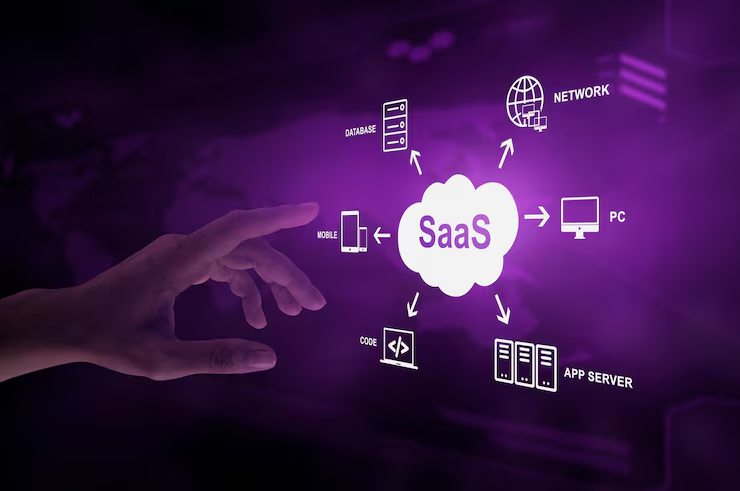
Remote and hybrid work have become important parts of modern business operations. Instead of requiring employees to work from one office every day, companies can now create flexible environments where people collaborate from different locations. This transformation has been supported significantly by Software as a Service, commonly known as SaaS.
SaaS platforms provide cloud-based applications that employees can access through an internet connection. Businesses do not need to install complicated software on individual computers or maintain large on-site systems. From communication and project management to scheduling and customer service, SaaS tools help organizations maintain productivity regardless of where their teams work.
Making Communication Easier Across Locations
Communication is one of the biggest challenges for remote and hybrid teams. When employees are working in different locations, casual conversations and face-to-face discussions are no longer always available. SaaS communication platforms help fill this gap by providing instant messaging, video meetings, voice calls, and file-sharing capabilities.
Employees can communicate with colleagues without needing to be in the same building. Teams can create dedicated channels for projects, departments, or specific discussions. Video conferencing tools also make it possible to hold meetings with participants located in different cities or countries.
These capabilities help organizations maintain consistent communication while reducing the limitations created by physical distance.
Supporting Real-Time Collaboration
Collaboration does not have to stop when employees work from different locations. Cloud-based SaaS applications allow multiple people to work with shared documents, presentations, spreadsheets, and project files.
Instead of sending different versions of a document through email, team members can access a centralized version. Changes can be tracked, comments can be added, and employees can contribute according to their responsibilities.
This approach helps reduce confusion and makes teamwork more organized. It is particularly useful for companies where employees work different schedules or operate across multiple time zones.
Improving Project and Task Management
Remote teams need clear systems for organizing responsibilities. SaaS project management applications provide centralized spaces where managers can create tasks, assign responsibilities, establish deadlines, and monitor progress.
Employees can check their assignments without waiting for an in-person meeting. Managers can also review project status and identify potential delays earlier.
Task management becomes particularly valuable for hybrid workplaces because employees may alternate between working from home, coworking spaces, and offices. A cloud-based system keeps project information available regardless of the employee’s physical location.
Creating Greater Visibility
Visibility is essential when teams are distributed. Managers need to understand what work has been completed, what remains outstanding, and whether projects are progressing according to schedule.
SaaS dashboards can provide this information in an accessible format. Depending on the platform, businesses may track deadlines, workloads, project milestones, customer interactions, and other important activities.
This does not mean employees need constant supervision. Instead, shared information gives teams a common understanding of priorities and progress.
Simplifying Employee Scheduling
Scheduling can become complicated when employees, customers, and managers have different availability. SaaS scheduling solutions can make appointment management much easier by allowing users to organize meetings and availability online.
For service-based organizations, Appointment scheduling software for small businesses can provide a centralized way to manage customer bookings. Customers can view available times and schedule appointments without requiring lengthy email exchanges or phone calls.
These tools can also send reminders, update calendars, and reduce scheduling conflicts. For remote businesses, this functionality is especially useful because appointments may involve people who are not located in the same office.
Connecting Scheduling With Daily Workflows
Modern SaaS applications can often connect with other cloud-based tools. For example, an appointment booking can be linked with an online calendar, customer relationship management platform, or communication application.
This creates a smoother workflow. Once an appointment is scheduled, the relevant information can become available to the employee responsible for the meeting. Automated reminders can also help reduce missed appointments.
For small businesses with limited administrative resources, these capabilities can save time and allow employees to focus on customer service and revenue-generating activities.
Providing Secure Access to Business Information
Remote work requires employees to access company information outside traditional office networks. SaaS platforms provide cloud-based access while businesses can use security features such as authentication controls, user permissions, encryption, and activity monitoring.
Administrators can determine which employees have access to specific applications or information. When an employee changes roles or leaves the organization, access can also be adjusted or removed.
Businesses should still establish strong cybersecurity policies. SaaS technology can support secure remote operations, but organizations need appropriate passwords, access controls, employee training, and security procedures.
Supporting Flexible Employee Workstyles
One of the major benefits of SaaS is flexibility. Employees can often access cloud applications through computers, tablets, and mobile devices. This makes it easier for people to work from home, travel, or move between office locations.
Hybrid workplaces can use SaaS tools to create a consistent digital environment. Employees may have access to the same files, communication channels, project information, and business applications whether they are sitting in an office or working remotely.
This flexibility can also support businesses that employ people in different regions. Companies can build distributed teams without requiring every employee to relocate.
Reducing Infrastructure Requirements
Traditional business software may require significant hardware, installation, maintenance, and technical support. SaaS reduces many of these requirements because applications are hosted by service providers and delivered through the internet.
Businesses generally access the software through subscriptions, allowing them to select solutions based on their needs. Updates are typically managed by the provider, which can reduce the workload for internal IT teams.
This can be especially helpful for growing businesses that need to expand their digital capabilities without making large investments in physical infrastructure.
Helping Businesses Scale
SaaS platforms can make it easier for organizations to add users and adopt new applications as their needs change. A company might begin with a small remote team and gradually expand into multiple departments or locations.
Cloud-based software can support this growth by providing centralized systems that can be accessed by authorized employees. Businesses can also introduce specialized SaaS tools for accounting, marketing, human resources, customer support, analytics, and other functions.
Encouraging Better Work-Life Flexibility
Remote and hybrid work can give employees greater control over how they organize their working day. SaaS applications contribute to this flexibility by making important business resources accessible outside a traditional office environment.
Employees can collaborate online, attend virtual meetings, update projects, manage appointments, and access documents without being physically present at company headquarters.
However, flexibility works best when organizations establish clear expectations. Teams should define communication practices, meeting schedules, response times, and responsibilities so that employees understand how remote collaboration should operate.
Using Data to Improve Remote Operations
SaaS platforms can generate useful business data. Managers can review project completion rates, customer appointments, service activity, workflow performance, and other operational information.
These insights can help companies identify bottlenecks and improve processes. For example, a business may discover that certain appointment times are consistently popular or that specific workflows create unnecessary delays.
Data-driven decisions can help remote and hybrid businesses continuously improve their operations rather than relying entirely on assumptions.
The Future of Flexible Work With SaaS
SaaS has become an important foundation for remote and hybrid workplaces because it connects people, information, and processes through cloud-based systems. Communication platforms support teamwork, project management tools organize responsibilities, scheduling applications simplify appointments, and security features help protect business resources.
As organizations continue developing flexible work models, SaaS solutions can provide the infrastructure needed to keep employees connected and productive. The most effective approach is not simply adopting more software but choosing tools that integrate with existing workflows and solve genuine business challenges.
For remote and hybrid companies, the combination of cloud accessibility, collaboration, automation, scheduling, and centralized information can create a more flexible and organized working environment. With thoughtful implementation, SaaS can help businesses maintain strong operations while giving employees and customers greater convenience.



More Stories
How AI-Powered Recruiters Help Businesses Discover Specialized Talent
How an AI Agency for Automation Can Modernize Outdated Processes
HR Software: Essential Tools for Building a More Efficient Workplace