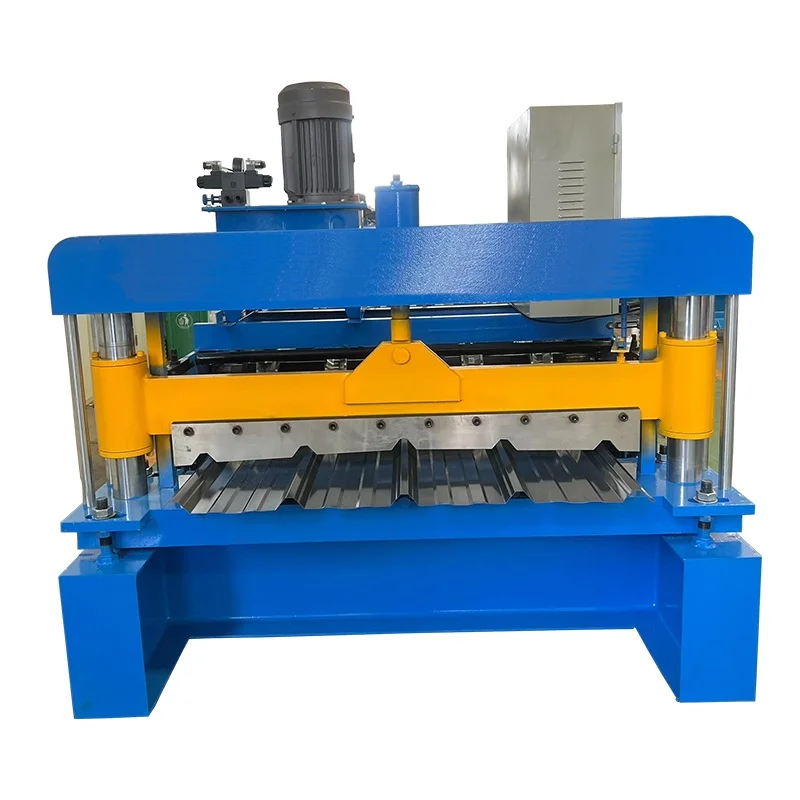
The roofing industry continues to grow as residential, commercial, and industrial construction projects demand durable, affordable, and high-quality roofing materials. For manufacturers, investing in the right production equipment is essential for meeting customer expectations, maintaining product quality, and improving business profitability. Roofing sheet roll forming machines play an important role in producing consistent roofing profiles with accuracy and efficiency. However, selecting the right machine requires careful consideration of production requirements, material compatibility, machine capabilities, and long-term operating costs.
Whether you are starting a new roofing sheet manufacturing business or upgrading your existing production facility, choosing suitable equipment can significantly influence your success. Understanding the important factors involved in the selection process will help you make an informed investment.
Understand Your Business and Production Requirements
Before purchasing any equipment, evaluate your business objectives and expected production volume. Different manufacturers have different requirements depending on their target customers, product range, and market demand.
If your business primarily serves residential construction projects, you may need machines capable of producing standard corrugated or trapezoidal roofing sheets. On the other hand, businesses supplying large industrial buildings may require equipment that produces wider profiles, thicker sheets, or customized roofing designs.
Consider your current production capacity and future expansion plans. A machine that meets your present requirements but cannot support increased demand may create limitations later. Selecting equipment with suitable production capacity allows your business to grow without requiring an immediate replacement.
Choose the Right Roofing Sheet Profile
Roofing sheets are available in several designs, and each profile serves different construction purposes. Therefore, identifying the types of products you intend to manufacture is an important part of selecting suitable machinery.
Corrugated Roofing Sheets
Corrugated sheets feature a wave-like design that provides structural strength and helps manage rainwater drainage. They are commonly used for residential buildings, agricultural structures, warehouses, and sheds.
Trapezoidal Roofing Sheets
Trapezoidal profiles feature angular ribs that provide strength and stability. These sheets are popular in commercial and industrial construction because they can cover large areas efficiently.
Customized Roofing Profiles
Some customers require specific dimensions, patterns, or designs for architectural and industrial applications. If customization is important to your business, consider machinery that supports flexible production settings and interchangeable tooling.
Choosing equipment according to your target roofing profiles ensures that you can manufacture products that meet customer requirements.
Evaluate Material Compatibility
Material compatibility is another important factor when comparing roofing sheet roll forming machines. Different roofing applications require different metal materials, thicknesses, and surface finishes.
Common materials include galvanized steel, pre-painted galvanized steel, aluminum, and other coated metal sheets. Each material has specific forming characteristics that influence machine performance and final product quality.
Before making a purchase, check the machine’s supported material thickness and width. Ensure that its rollers and forming stations can process the materials you plan to use.
A machine designed for the required material specifications can reduce forming defects, minimize material waste, and maintain consistent product dimensions. It is also important to consider whether the equipment can accommodate different material specifications if your product range expands in the future.
Check Machine Speed and Production Capacity
Production speed directly affects manufacturing efficiency and the number of orders your business can complete within a specific period. However, selecting machinery based only on maximum speed is not always the best approach.
Evaluate the actual production capacity under normal operating conditions. Consider how quickly the machine can form roofing sheets, how long it takes to change production settings, and whether its feeding and cutting systems can maintain consistent performance.
High-speed equipment can benefit businesses handling large orders, but smaller manufacturers may achieve better financial results with moderately sized machinery.
Look for a machine that balances production speed, accuracy, reliability, and operating costs. This approach helps maintain productivity without creating unnecessary expenses.
Examine the Quality of Rollers and Forming Stations
Rollers are among the most important components of a roll forming machine. They gradually shape flat metal sheets into the required roofing profile as the material passes through multiple forming stations.
The quality, precision, and durability of these rollers directly influence the finished product. Poorly manufactured rollers may create uneven profiles, surface scratches, dimensional inconsistencies, and other production problems.
When evaluating equipment, ask about roller materials, machining accuracy, surface treatment, and expected service life. High-quality rollers generally provide better forming consistency and reduce maintenance requirements.
You should also examine the number and arrangement of forming stations. A properly designed forming system helps distribute shaping operations evenly, reducing stress on the metal and improving the final appearance of roofing sheets.
Consider Automation and Control Systems
Modern manufacturing facilities increasingly depend on automation to improve production accuracy and reduce manual work. Advanced roofing sheet roll forming machines often include computerized control systems that simplify production operations.
A programmable logic controller (PLC) allows operators to enter sheet dimensions, production quantities, and cutting requirements. The machine can then coordinate feeding, forming, and cutting operations according to the selected settings.
Touchscreen interfaces also make equipment easier to operate by providing accessible production controls and operating information.
Depending on your business requirements, consider features such as:
- Automatic length measurement and cutting.
- Digital production counters.
- PLC-based control systems.
- Emergency stop functions.
- Automated feeding arrangements.
- Adjustable production parameters.
Automation can improve production consistency, reduce operator errors, and help manufacturers manage larger orders efficiently.
Assess Machine Durability and Construction Quality
Industrial machinery represents a significant investment, so durability should be a major consideration. A reliable machine should withstand continuous production activities while maintaining accurate forming performance.
Examine the machine frame, structural design, drive system, shafts, bearings, and other mechanical components. A strong frame helps reduce unwanted vibration and supports stable operation during production.
Pay attention to the quality of motors, gearboxes, electrical components, and hydraulic systems. These parts influence operational reliability and can affect maintenance expenses over time.
Request technical specifications and information about manufacturing standards before purchasing. If possible, inspect the equipment or request a demonstration to evaluate its construction and operating performance.
Compare Installation, Maintenance, and After-Sales Support
Purchasing a machine is only the beginning of the manufacturing process. Proper installation, operator training, regular maintenance, and technical assistance are essential for achieving long-term performance.
Choose a supplier that provides clear installation guidance and professional technical support. Training helps operators understand machine controls, production settings, safety procedures, and routine maintenance requirements.
Ask about spare parts availability, maintenance schedules, warranty coverage, and response times for technical assistance.
Regular maintenance, including roller inspections, lubrication, electrical checks, and alignment adjustments, helps prevent unexpected breakdowns. Reliable after-sales service can reduce downtime and protect your investment.
Calculate the Total Cost of Ownership
The purchase price is important, but it should not be the only factor influencing your decision. A less expensive machine may have higher operating costs, limited production capacity, or frequent maintenance requirements.
Calculate the total cost of ownership by considering several expenses:
- Initial machine purchase price.
- Transportation and installation costs.
- Electricity consumption.
- Labor requirements.
- Spare parts and maintenance.
- Tooling and replacement components.
- Production downtime.
- Expected machine lifespan.
Compare these expenses with the machine’s expected production output and revenue potential. A slightly more expensive machine may offer better long-term value if it delivers higher efficiency, improved durability, and lower maintenance costs.
Select a Reliable Machine Manufacturer
The reputation and experience of the equipment supplier can influence your purchasing experience. Working with an established manufacturer may provide greater confidence in machine quality, engineering standards, and technical support.
Research potential suppliers and review their product specifications, manufacturing capabilities, customer feedback, and industry experience. Ask whether they have supplied similar machines to businesses with production requirements comparable to yours.
A professional manufacturer should be able to explain machine configurations, recommend suitable equipment, and provide technical documentation. They should also communicate clearly about delivery schedules, warranties, installation, and spare parts.
Avoid making purchasing decisions based entirely on attractive prices or promotional claims. Focus on verified capabilities and the supplier’s ability to support your business over time.
Prioritize Workplace Safety and Operator Convenience
Safety is essential in every metal fabrication facility. Roll forming equipment contains moving rollers, cutting systems, electrical components, and other mechanisms that require proper handling.
Look for safety guards, emergency stop buttons, protective covers, and clearly accessible control panels. The machine should also have an organized layout that allows operators to perform routine tasks safely.
Operator convenience is equally important. Accessible maintenance points, understandable controls, and efficient material handling arrangements can improve daily operations.
Ensure that employees receive appropriate training and follow the manufacturer’s safety instructions. A safe working environment helps protect employees while supporting consistent manufacturing performance.
Conclusion
Choosing the right roofing sheet roll forming machines is an important decision that can influence your business’s productivity, product quality, and profitability. Before investing, evaluate your production requirements, roofing profiles, material compatibility, machine speed, automation features, and overall construction quality.
It is equally important to consider maintenance expenses, supplier reputation, after-sales support, and long-term operating costs. By comparing these factors carefully, you can identify machinery that meets your current needs while supporting future business growth.
A well-selected machine can help manufacturers produce consistent roofing sheets, reduce material waste, improve operational efficiency, and respond effectively to changing market demands. Ultimately, investing in reliable equipment and building a strong relationship with a trusted manufacturer can create a solid foundation for long-term success in the roofing industry.

More Stories
Choosing the Right Surge Protector Power Strip for Office Equipment
Free Creator Tools: Essential Resources for Creating Engaging Digital Content
Exploring Industrial Drone Applications: 7 Core Uses, UAV Categories & Buying Tips