Virtualized work environments have become an important part of modern business computing. Instead of relying entirely on individual physical computers, organizations can provide employees with centralized virtual desktops and applications hosted on remote servers. This approach can simplify administration, improve accessibility, and make it easier to scale computing resources as business needs change. When these environments are built around Windows Server technologies, understanding Windows VPS RDS CAL requirements becomes an important part of planning.
A Windows VPS can provide a flexible server environment where businesses host applications, desktops, databases, development tools, and other services. Remote Desktop Services (RDS) can then allow authorized users to access a Windows-based environment remotely. However, organizations must consider licensing requirements alongside technical configuration to create a compliant and practical virtualized workplace.
Understanding Windows VPS in a Virtualized Workplace
A Virtual Private Server (VPS) is a virtualized server that operates on physical infrastructure but has its own allocated computing resources and operating environment. A Windows VPS runs a Microsoft Windows Server operating system and can be accessed remotely for administration or business activities.
For organizations with distributed teams, a Windows VPS can provide centralized access to applications and files. Employees can connect from different locations using supported remote-access technologies while the core computing environment remains hosted on the server.
This model can reduce dependence on powerful local computers because many workloads are processed on the server. It can also provide administrators with greater control over software installation, updates, security configurations, and user permissions.
What Does RDS CAL Mean?
Remote Desktop Services Client Access Licenses, commonly called RDS CALs, are licensing components associated with Microsoft’s Remote Desktop Services. They authorize users or devices to access certain Windows Server remote desktop functionality.
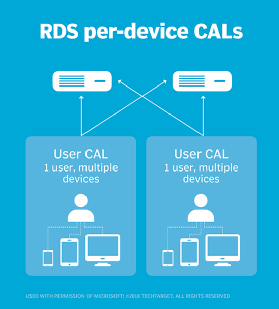
There are generally two primary licensing approaches: User CALs and Device CALs. A User CAL is associated with a specific user who may access the service from multiple devices, while a Device CAL is associated with a particular device that may be used by multiple people.
The appropriate licensing model depends on how an organization operates. For example, a business where employees use several computers, tablets, or other devices may approach licensing differently from a workplace where several employees share a small number of dedicated workstations.
Businesses should verify the applicable Microsoft licensing terms and their service provider’s policies before deploying remote desktop environments.
The Role of Windows VPS RDS CAL in Remote Work
A combination of Windows VPS infrastructure and appropriately licensed RDS functionality can support centralized remote work environments. Instead of installing every business application on every employee’s computer, organizations can host applications within a controlled server environment.
Employees can then connect to their assigned remote desktop sessions. Depending on the configuration, users may work with familiar Windows interfaces and access approved applications without requiring the same software installation on every local device.
This can be particularly useful for companies with remote employees, contractors, branch offices, or teams that frequently move between locations.
Centralized Application Management
One significant advantage of virtualized environments is centralized management. IT administrators can install approved software on the server instead of individually configuring numerous employee computers.
Updates can also be managed from a central location. This may reduce repetitive maintenance tasks and help organizations maintain more consistent software versions.
For example, a company using accounting, customer-management, design, or internal business applications can potentially host those applications within a controlled Windows Server environment. Authorized users can access the resources remotely according to their permissions.
Improving Accessibility for Distributed Teams
Modern businesses frequently operate across multiple locations and time zones. A virtualized Windows environment can provide employees with a consistent workspace regardless of where they are working.
A user may connect from a home office, branch location, or temporary workspace and access the same centrally hosted applications. The actual availability and performance depend on network quality, server resources, application requirements, and the specific remote-access configuration.
Reliable internet connectivity is therefore an important consideration when designing a virtualized workplace.
Resource Planning for Windows VPS Environments
Choosing the appropriate VPS resources is another important consideration. CPU, RAM, storage, and network capacity all influence the performance of a virtualized work environment.
A server supporting only a few lightweight users may require significantly fewer resources than an environment supporting dozens of employees running resource-intensive applications simultaneously.
Administrators should estimate the number of concurrent users, typical workloads, application requirements, storage needs, and expected growth. Monitoring resource consumption after deployment can also help identify bottlenecks and guide future upgrades.
Security Considerations for Remote Desktop Environments
Remote access introduces security considerations that should be addressed before users receive access to a virtualized environment.
Organizations should use strong authentication practices, carefully configured firewall rules, appropriate access controls, regular security updates, and account-management procedures. Administrative privileges should also be restricted to users who genuinely need them.
Multi-factor authentication may provide an additional security layer where supported by the chosen architecture. Organizations should also monitor authentication events and investigate unusual access activity.
Security should not be treated as an afterthought. A remote desktop environment exposes important business resources to network connections, making careful configuration essential.
Managing Users and Permissions
User management is central to a successful virtualized workplace. Each employee should receive only the access necessary for their role.
Administrators can organize users according to departments, responsibilities, or application requirements. For example, finance employees may require access to accounting applications, while customer-service employees may need access to customer-management software.
Well-designed permissions can reduce accidental changes and help limit the impact of compromised accounts.
Scaling a Virtualized Work Environment
One benefit of virtualization is the ability to adapt infrastructure as an organization grows. A small business may begin with a modest Windows VPS configuration and increase resources as its workforce expands.
However, scaling should include more than simply adding CPU or memory. Administrators should consider storage performance, network capacity, concurrent sessions, application licensing, backup requirements, and RDS licensing requirements.
Planning these elements together can help prevent performance problems as user numbers increase.
Backup and Disaster Recovery
Virtualized environments should also include appropriate backup and recovery strategies. Centralizing applications and data can simplify some administrative tasks, but it also means that critical resources may depend on shared infrastructure.
Regular backups should be designed according to the importance of the data and the organization’s recovery requirements. Businesses should also periodically test restoration procedures rather than assuming that backups will work when an emergency occurs.
A disaster recovery plan can define how services will be restored following hardware failure, accidental deletion, security incidents, or other disruptions.
Choosing a Windows VPS Provider
When selecting a Windows VPS provider, organizations should examine more than the advertised server specifications. Important considerations can include infrastructure reliability, available resources, network performance, backup options, support, data-center locations, security controls, and licensing arrangements.
Businesses should clearly understand which Windows Server licenses and RDS-related licenses are included and which must be obtained separately. Clear licensing information can help prevent unexpected costs and compliance problems.
Building a Practical Virtualized Workplace
A successful virtualized work environment combines suitable infrastructure, properly configured software, appropriate licensing, security controls, and effective administration.
Windows VPS RDS CAL planning should therefore be considered alongside the organization’s user requirements, application needs, security policies, and expected growth. A technically capable server is only one part of the overall solution.
When these elements are planned together, Windows-based virtualized environments can provide centralized access to applications and workspaces while giving administrators greater control over their computing infrastructure. Businesses should always verify current Microsoft licensing terms and obtain professional licensing advice when requirements are complex or uncertain.



More Stories
How SaaS Supports Remote and Hybrid Workplaces
How AI-Powered Recruiters Help Businesses Discover Specialized Talent
How an AI Agency for Automation Can Modernize Outdated Processes