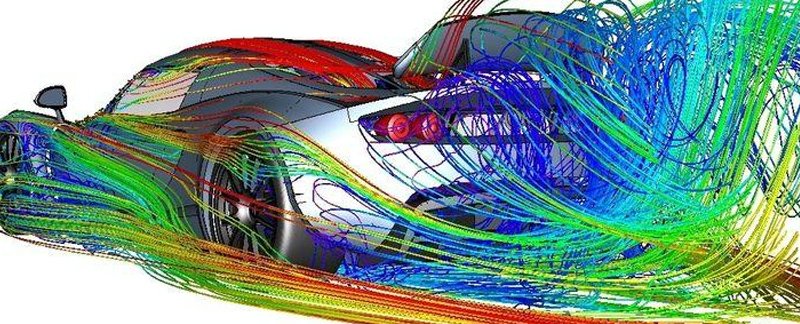
Computational Fluid Dynamics (CFD) has become an essential engineering tool for understanding fluid flow, heat transfer, turbulence, pressure distribution, and many other physical phenomena. From aerospace and automotive engineering to energy, manufacturing, and environmental applications, CFD allows engineers to study complex systems through numerical simulation before building expensive physical prototypes. As demand for simulation expertise continues to grow, CFD courses online have become a convenient way for students, engineers, and professionals to develop practical skills from almost anywhere.
However, choosing the right program can be challenging. Online courses vary significantly in terms of content, software training, instructor experience, practical projects, and learning support. Selecting a program that matches your current knowledge and career objectives is therefore important. A well-designed course should not simply introduce CFD concepts but also help you understand how to create, solve, validate, and interpret simulations.
Understand Your CFD Learning Goals
Before enrolling in any online program, identify what you want to achieve. A beginner may need an introduction to fluid mechanics, numerical methods, meshing, and basic simulation workflows. Someone with engineering experience may instead want advanced training in turbulence modeling, multiphase flow, heat transfer, optimization, or high-performance computing.
Your goals should influence the type of course you select. If your objective is academic learning, a program with strong theoretical foundations may be appropriate. If your goal is professional development, prioritize courses containing realistic engineering projects and industry-oriented workflows.
Clearly defining your goals also helps prevent spending time on topics you already understand. The best learning experience is one that gradually develops your existing knowledge rather than overwhelming you with unnecessarily advanced concepts.
Check the Course Curriculum
A detailed curriculum is one of the most important factors when comparing CFD courses online. Look for a program that covers the complete simulation process instead of focusing on only one technical area.
A strong curriculum should typically introduce geometry preparation, computational domain creation, mesh generation, boundary conditions, solver settings, convergence monitoring, post-processing, and results interpretation. Depending on the program level, it may also cover turbulence models, compressible flow, heat transfer, multiphase flow, transient simulations, and fluid-structure interaction.
Numerical methods should also receive attention. Understanding what happens behind the software interface allows learners to recognize potential numerical errors and make better decisions when setting up simulations.
Evaluate Software Training
CFD software is an important part of practical simulation work. Different industries and organizations use different platforms, so it is useful to determine which software a course teaches before registering.
For example, learners interested in commercial engineering workflows may want training focused on widely used CFD packages. Others may prefer open-source tools or programs that combine several software environments.
The important point is that software instruction should go beyond showing which buttons to click. A valuable course explains why particular models, mesh settings, solver options, and boundary conditions are selected. This approach helps learners transfer their knowledge to new projects rather than simply repeat a demonstration.
Look for Hands-On Projects
Theory is important, but CFD skills develop through practice. When comparing CFD courses online, examine how much hands-on work is included.
Projects can demonstrate whether a learner can apply theoretical concepts to realistic engineering problems. Useful assignments might involve internal pipe flow, external aerodynamics, thermal systems, pumps, fans, electronic cooling, or other industry-relevant applications.
A good course should allow students to build simulations themselves. Ideally, projects should progress from relatively simple exercises to more complicated cases. This structure gives learners opportunities to make mistakes, analyze their results, and improve their workflow.
Consider Instructor Experience
The instructor can significantly influence the quality of an online CFD course. Look for educators who have practical experience in CFD, engineering simulation, research, or industrial applications.
An experienced instructor can explain not only how a simulation is performed but also how to recognize unreliable results. CFD requires engineering judgment, and that judgment often comes from understanding common modeling problems.
Instructor explanations should be clear and structured. Demonstrations should ideally include discussions about mesh quality, convergence, boundary conditions, solver selection, and validation rather than concentrating entirely on software commands.
Examine Learning Support
Online education works best when learners have access to appropriate support. Before selecting a program, check whether students can ask questions, receive feedback on assignments, participate in discussion forums, or attend live sessions.
Support becomes particularly important when working on CFD projects because errors can arise from geometry, meshing, physical models, solver settings, or post-processing. Without guidance, beginners may spend significant amounts of time trying to identify problems on their own.
Programs that provide constructive feedback can help learners understand not just whether an answer is correct but why a particular approach works.
Choose the Right Difficulty Level
Not every CFD learner should begin with an advanced course. Beginners should look for programs that establish the necessary foundation before introducing complex simulation methods.
An introductory program may cover fluid mechanics, conservation equations, basic numerical methods, meshing, and fundamental solver workflows. Intermediate learners can move toward turbulence, transient simulations, heat transfer, and more sophisticated modeling.
Advanced learners may benefit from courses involving optimization, user-defined models, automation, high-performance computing, uncertainty analysis, or advanced turbulence modeling.
Choosing a level that matches your current knowledge can make learning more efficient and reduce unnecessary frustration.
Review Practical Assignments and Projects
Assignments are another useful indicator of course quality. A program that includes regular exercises gives learners an opportunity to reinforce concepts after each lesson.
Pay attention to whether assignments require independent problem-solving. Simply following an instructor’s exact steps provides limited experience. More valuable exercises give learners a problem statement and require them to determine appropriate geometry, mesh, models, boundary conditions, and solver settings.
Project-based learning can also strengthen a professional portfolio. Well-documented CFD projects can demonstrate practical skills when applying for internships, research positions, or engineering roles.
Consider Course Flexibility
One of the major advantages of online education is flexibility. Before choosing a program, determine whether lessons can be completed at your own pace or whether attendance at specific times is required.
Self-paced programs can be useful for working professionals and students with changing schedules. Live courses may be better for learners who prefer direct interaction and scheduled instruction.
Also consider lesson duration, access period, downloadable resources, and project deadlines. A course should fit realistically into your existing schedule.
Compare Cost With Long-Term Value
Price should not be the only factor when comparing CFD courses online. A low-cost course may provide limited content, while a more comprehensive program could offer projects, instructor support, software demonstrations, and advanced material.
Instead of focusing exclusively on the enrollment price, consider the overall value. Ask whether the course can help you develop skills that are useful for academic research, internships, engineering projects, or career advancement.
Free introductory resources can be useful for understanding basic concepts, but structured paid programs may provide a more organized pathway for learners seeking deeper expertise.
Look for Validation and Verification Skills
A critical part of CFD education is learning that simulation results should not automatically be accepted as accurate. Numerical results need to be checked and interpreted carefully.
A quality course should introduce concepts such as mesh independence, residual monitoring, conservation checks, comparison with analytical solutions, experimental validation, and sensitivity analysis where appropriate.
These practices help learners distinguish between a simulation that simply produces colorful results and one that provides meaningful engineering information.
Build Skills Through Consistent Practice
Choosing the right course is only the beginning. CFD proficiency develops through repeated practice. After completing lessons, try modifying simulation parameters, testing different meshes, comparing models, and investigating unexpected results.
Keeping a record of simulation settings, assumptions, results, and conclusions can also improve technical communication. Engineers often need to explain simulation findings to colleagues, managers, clients, or researchers who may not have performed the analysis themselves.
The ability to communicate CFD results clearly is therefore almost as important as knowing how to operate the software.
Conclusion
Selecting the right CFD courses online requires more than comparing course titles or prices. Learners should examine the curriculum, software coverage, instructor expertise, practical projects, support options, difficulty level, flexibility, and opportunities for validation and independent problem-solving.
The ideal program should provide a balanced combination of CFD theory and hands-on simulation practice. By choosing a course that matches your current abilities and long-term goals, you can build a stronger foundation in computational fluid dynamics and develop simulation skills that can be applied to academic research, engineering projects, internships, and professional work.



More Stories
What Would AI Consciousness Actually Mean for Humanity?
What It Means to Effectively Lead Teams and Resolve Workplace Conflicts
Creating a Dependable California PSPS Backup Power Plan for Emergency Preparedness