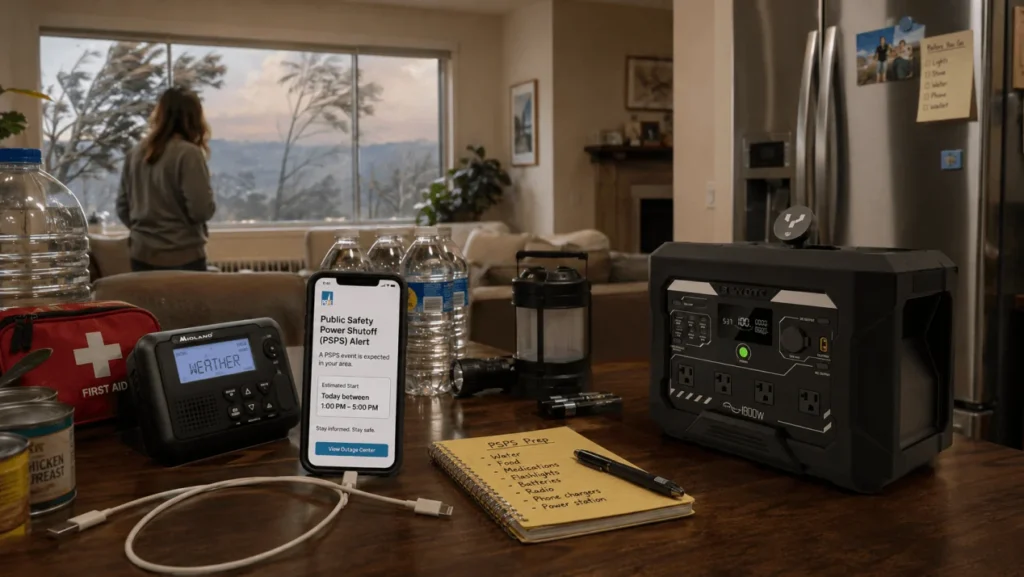
California’s wildfire season has made planned power outages an important part of emergency preparedness. During periods of extreme heat, dry vegetation, strong winds, or elevated wildfire risk, utilities may shut off electricity to reduce the possibility of power lines starting or worsening a fire. These Public Safety Power Shutoffs (PSPS) can last for hours or, in some situations, several days.
A well-designed California PSPS power shutoff backup plan helps households prepare before the lights go out. Instead of scrambling for flashlights, charging devices, or finding alternative ways to preserve food, homeowners can follow a practical system designed around their essential needs. The right combination of backup power, emergency supplies, communication tools, and planning can make a major difference during an extended outage.
Understand How PSPS Events Can Affect Your Home
The first step in emergency planning is understanding what happens when utility power is intentionally disconnected. A PSPS can affect lighting, refrigeration, heating and cooling, internet service, medical equipment, electric cooking appliances, garage doors, security systems, and other household devices.
The duration and geographic scope of a shutoff can vary. Restoration may also depend on weather conditions and utility inspections. This means a backup plan should not assume that electricity will return within a few hours.
Start by identifying everything in your home that depends on electricity. Separate these items into three categories: essential, useful, and nonessential. Essential equipment might include communication devices, refrigerators, medical equipment, internet equipment, and basic lighting. This list becomes the foundation of your backup power strategy.
Calculate Your Essential Power Requirements
One of the most common mistakes homeowners make is purchasing a backup power source without calculating their actual electricity requirements. A large battery or generator may seem impressive, but the important question is how long it can operate the equipment you need.
Create a list of essential appliances and electronics. Record their wattage whenever possible and estimate how many hours each item needs to operate. Refrigerators, for example, cycle on and off rather than drawing their maximum power continuously. Phones and laptops generally require much less energy than heating or cooling equipment.
You can calculate approximate energy requirements using watt-hours. If a device consumes 50 watts and operates for five hours, it requires approximately 250 watt-hours.
This calculation allows you to select an appropriately sized portable power station, battery system, solar generator, or conventional generator. It also helps prevent unnecessary spending on equipment that does not match your household’s actual needs.
Choose the Right Backup Power Source
Backup power technology has expanded considerably, giving homeowners several options for PSPS preparation.
Portable power stations are popular because they are relatively simple to operate and can provide electricity for electronics, lights, refrigerators, communication equipment, and other compatible devices. Battery-powered systems also operate quietly and do not produce exhaust fumes during use.
Gasoline or propane generators can provide substantial power for longer periods, particularly when larger appliances need to operate. However, they require fuel and must always be operated outdoors in a properly ventilated location. Never operate a fuel-burning generator inside a house, garage, basement, or other enclosed space because carbon monoxide can accumulate to dangerous levels.
Solar panels can add another layer of resilience. A compatible solar generator or power station can potentially be recharged during daylight hours, reducing dependence on stored energy or fuel. Solar charging is especially useful when an outage lasts multiple days.
Prioritize Refrigeration and Food Storage
Food preservation should be a major component of your California PSPS power shutoff backup plan. Refrigerators and freezers can become a concern during extended outages, particularly during California’s warmer months.
Keep refrigerator and freezer doors closed as much as possible when the electricity is unavailable. Before an anticipated outage, freeze items that can safely be frozen and prepare coolers with ice or frozen water containers if appropriate.
A backup battery or generator can be used to power a refrigerator when the system is properly sized. Rather than continuously powering every appliance, homeowners can prioritize critical loads and cycle equipment strategically.
Maintaining a thermometer for refrigerators and freezers can also help you determine whether food remains within a safe temperature range. When in doubt about food safety, follow established food-safety guidance rather than relying solely on appearance or smell.
Keep Communication Devices Ready
Communication becomes particularly important during a wildfire-related emergency. Keep mobile phones, rechargeable batteries, laptops, radios, and other communication equipment charged before a predicted PSPS event.
A portable power station can provide additional charging capacity when wall outlets are unavailable. Consider maintaining multiple charging options, such as USB cables, vehicle charging, and battery packs.
Keep emergency contact information available offline as well. Internet and cellular networks can become disrupted during severe weather or wildfire conditions, so having important phone numbers and local emergency information stored in more than one way can be useful.
Prepare for Heating and Cooling Challenges
Temperature control can become one of the most difficult parts of an extended outage. Air conditioning systems can consume substantial amounts of electricity, making them difficult to operate with smaller battery systems.
Instead of attempting to power an entire HVAC system with a limited backup source, consider strategies that reduce indoor temperature naturally. Close blinds and curtains during hot periods, minimize unnecessary door opening, and use battery-powered fans when appropriate.
During cold weather, layers of clothing, blankets, and safe alternative heating strategies can reduce dependence on electricity. Never use outdoor heating equipment indoors or improvise heating methods that could create fire or carbon monoxide hazards.
Build an Emergency Power Station Setup
Organization matters as much as equipment. Store your backup power equipment where it is accessible and protected from inappropriate temperatures, moisture, and physical damage.
Keep charging cables, adapters, extension cords suitable for the intended equipment, flashlights, batteries, and instructions together. Label important equipment so family members can understand what it does and how it should be used.
Test the system periodically. A battery that has been sitting unused for months may not perform as expected if it was not properly maintained. Recharge portable batteries according to manufacturer instructions and periodically verify that essential devices can be powered.
For generators, follow the manufacturer’s maintenance schedule and keep only legally and safely stored fuel supplies. Never wait until a PSPS announcement to discover that a generator will not start.
Add Solar Charging for Extended Outages
Solar charging can make a backup system more sustainable during longer outages. A properly matched solar panel can recharge compatible battery equipment during daylight hours.
Solar power should not necessarily be viewed as a complete replacement for a large generator. Weather, sunlight availability, panel orientation, shading, and system efficiency all influence charging performance.
Instead, solar can serve as another layer in a resilient setup. During daylight, panels can replenish some stored energy while the battery supplies essential devices. This approach can help extend available power when the utility outage continues longer than expected.
Protect Critical Household Equipment
A PSPS event can involve the loss and restoration of electricity, so homeowners should consider how sensitive electronics will be protected. Computers, networking equipment, televisions, and other electronics can benefit from appropriate surge protection and properly rated backup equipment.
If your home includes electrically powered medical equipment, make backup planning a priority. Speak with your healthcare provider or equipment supplier about appropriate emergency power requirements rather than assuming a general-purpose battery or generator will be sufficient.
Home security equipment also deserves attention. Battery backups for alarms, cameras, routers, and communication devices can help maintain awareness during an outage.
Create a Family Emergency Procedure
Everyone in the household should know what to do when a PSPS warning arrives. Decide where flashlights are stored, which appliances receive backup power, how devices are charged, and how emergency information will be monitored.
Write down a simple checklist covering charging devices, securing food, preparing backup power, checking vulnerable household members, and monitoring official emergency communications.
If evacuation becomes necessary because of wildfire conditions, the backup power system should never become a reason to delay leaving. Personal safety and evacuation instructions always take priority over protecting property or equipment.
Review and Improve Your Backup Plan
A California PSPS power shutoff backup plan should be treated as an evolving emergency system rather than a one-time purchase. Review your electricity needs at least once a year and whenever major household equipment changes.
Check battery capacity, generator condition, cables, fuel storage, solar panels, emergency lighting, and communication equipment. Practice using the system before an emergency occurs.
The most reliable approach combines several layers of preparedness: appropriately sized backup power, alternative charging methods, food-storage planning, emergency lighting, communication tools, and a clear household procedure. With preparation completed before wildfire conditions become critical, a PSPS outage can become a manageable interruption rather than an unexpected crisis.




More Stories
New Construction Homes in Ave Maria: A Guide for Modern Homebuyers
How Plastic Bins with Risers Improve Inventory Management Efficiency
Hot Stamping Machine Manufacturer Solutions for Consistent Product Finishing