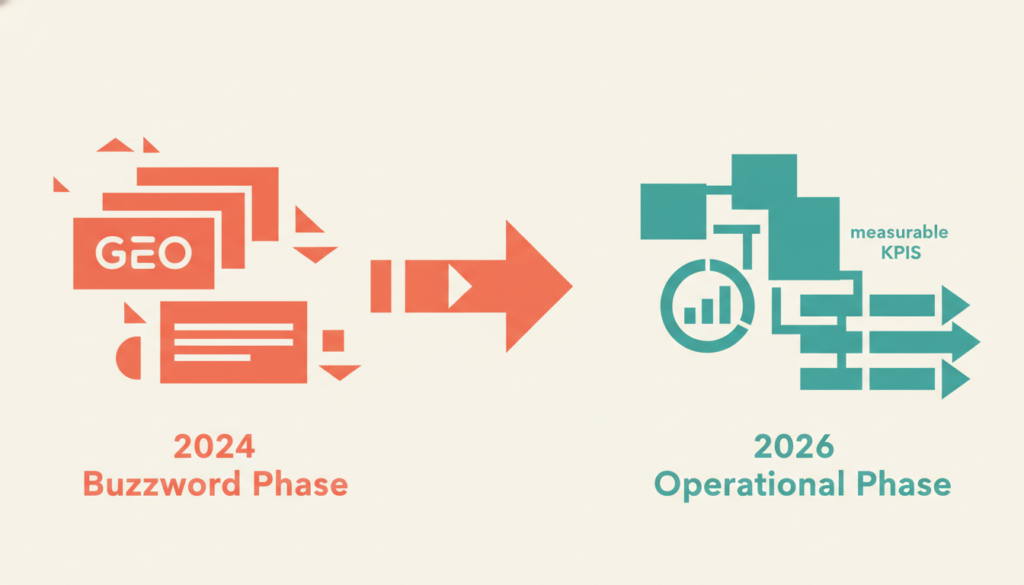
Marketing teams keep adding “GEO” to their strategy decks. Few can explain what it means in practice. Even fewer have a repeatable process for improving visibility in generative search results.
Generative engine optimization has moved past the hype phase. In 2026, it demands concrete workflows, measurable KPIs, and technical execution. Here is how to operationalize it.
What Most GEO Approaches Get Wrong
The biggest mistake is treating GEO as rebranded SEO. Teams rename their existing content calendars, add a few FAQ sections, and call it done. This misses the fundamental shift in how generative engines select and synthesize sources.
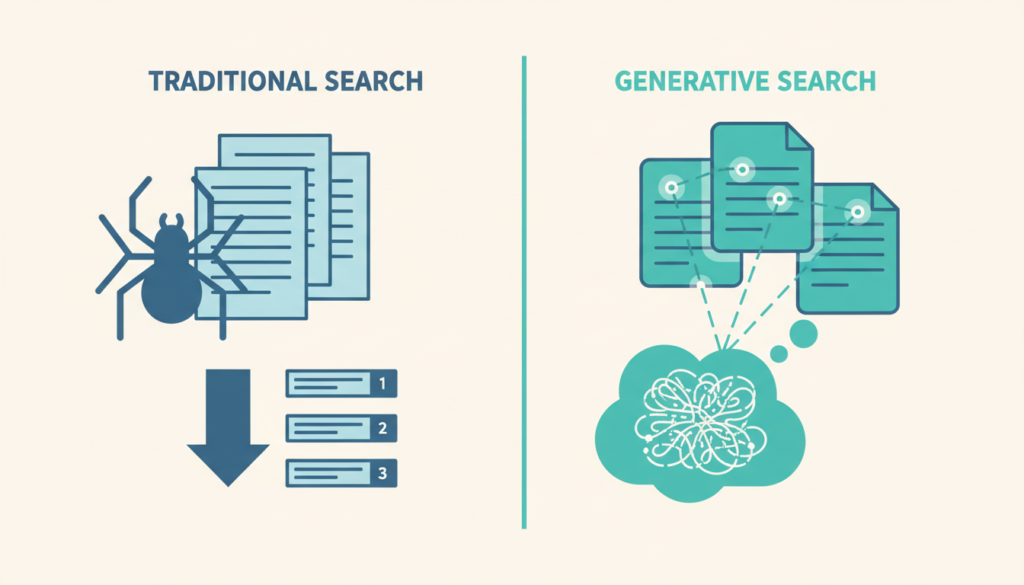
Generative engines do not rank pages. They extract claims, verify them against multiple sources, and weave them into synthesized answers. Your content needs to be structured for extraction, not just for ranking.
Another common failure is chasing a single platform. Optimizing only for ChatGPT ignores Perplexity, Gemini, and dozens of vertical AI tools. Each engine has different retrieval methods and citation preferences.
GEO is not a rebrand of SEO. It requires different content structures, different measurement, and different technical foundations.
Criteria for a Real GEO Strategy in 2026
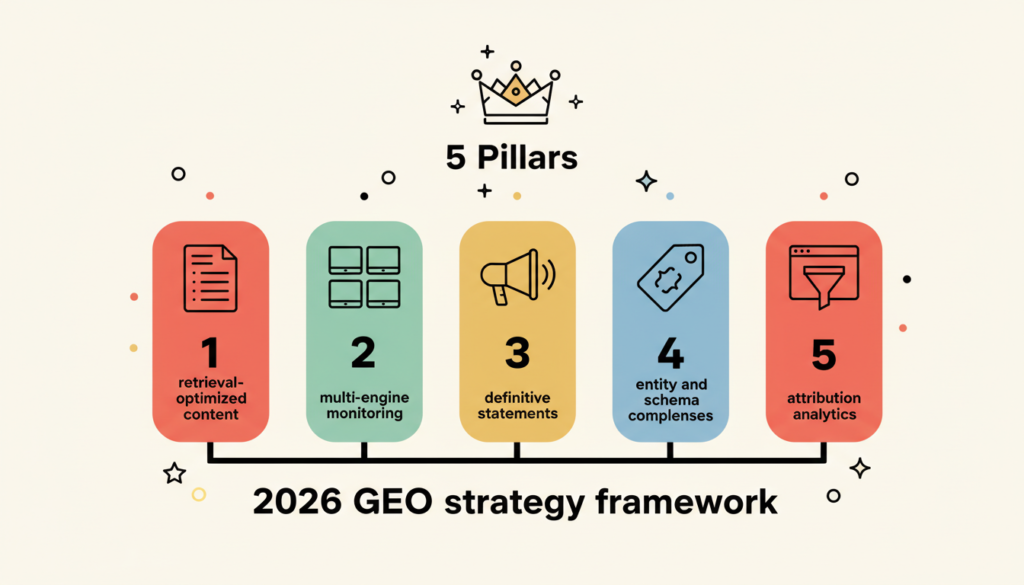
Retrieval-Optimized Content Architecture
Your content must be designed for retrieval-augmented generation. That means clear claim statements, supporting evidence within the same section, and structured headers that map to common query patterns. Walls of text get skipped by retrieval systems.
Multi-Engine Monitoring
A serious GEO program tracks visibility across at least four generative platforms. Each platform weights sources differently. Your monitoring stack needs automated queries, citation tracking, and competitive benchmarking across all of them.
Definitive Statements Over Hedged Language
Generative engines prefer content that makes clear, attributable claims. Pages full of “it depends” and “some experts say” rarely get cited. Take positions. Back them with data. LLMs cite confidence, not ambiguity.
Entity and Schema Completeness
Your brand entity needs to be fully represented in structured data. Every product, service, and key person should have schema markup. Investing in ai engine optimization means building the structured foundation that generative engines rely on for entity resolution.
Attribution-Ready Analytics
You cannot improve what you cannot measure. Your analytics stack needs to track AI-referred traffic separately from organic search. UTM parameters, referrer analysis, and direct API monitoring are table stakes for 2026.
Practical Tips to Operationalize GEO This Quarter
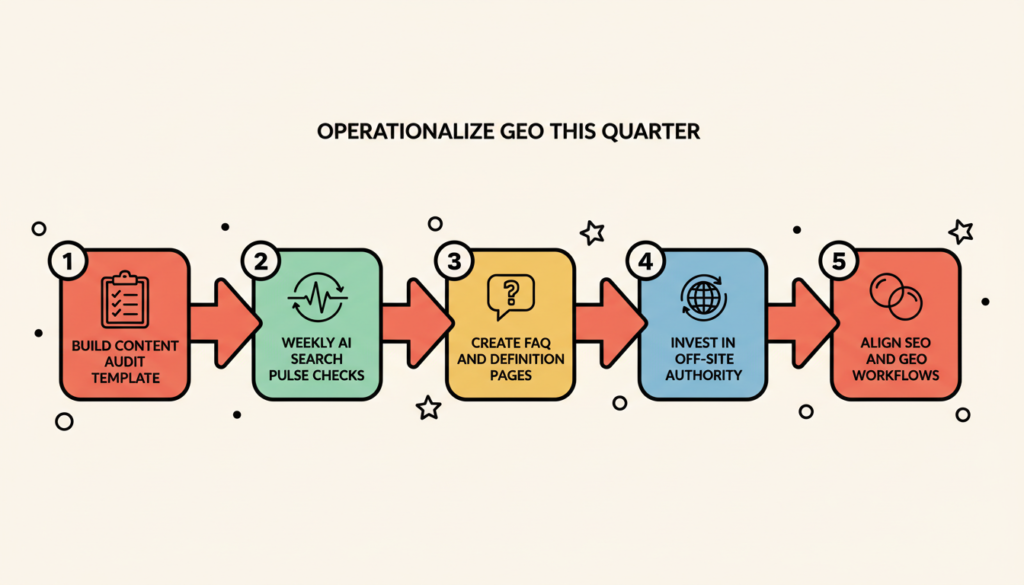
Build a GEO Content Audit Template
Create a scoring rubric for every piece of content. Rate each page on claim clarity, structural markup, citation potential, and entity coverage. Prioritize rewrites based on traffic value and current AI visibility gaps.
Establish Weekly AI Search Pulse Checks
Run your top 20 queries through every major generative engine weekly. Log which sources get cited, how answers change, and where your competitors appear. This rhythm catches shifts before they become trends.
Create Dedicated FAQ and Definition Pages
Generative engines pull heavily from pages that answer specific questions with direct, concise statements. Build standalone pages for your most important terms and questions. Make each answer self-contained and citable.
Invest in Off-Site Authority for GEO
Your site alone is not enough. LLMs cross-reference multiple sources before citing a brand. Publish in industry journals, contribute to research reports, and maintain updated profiles on platforms that AI engines index. A disciplined ai engine optimization approach includes this off-site layer as a core workstream.
Align Your SEO and GEO Workflows
Do not run SEO and GEO as separate programs. Unified keyword-to-query mapping, shared content calendars, and integrated reporting prevent duplication and ensure every content investment serves both channels.
Your Competitors Are Already Operationalizing
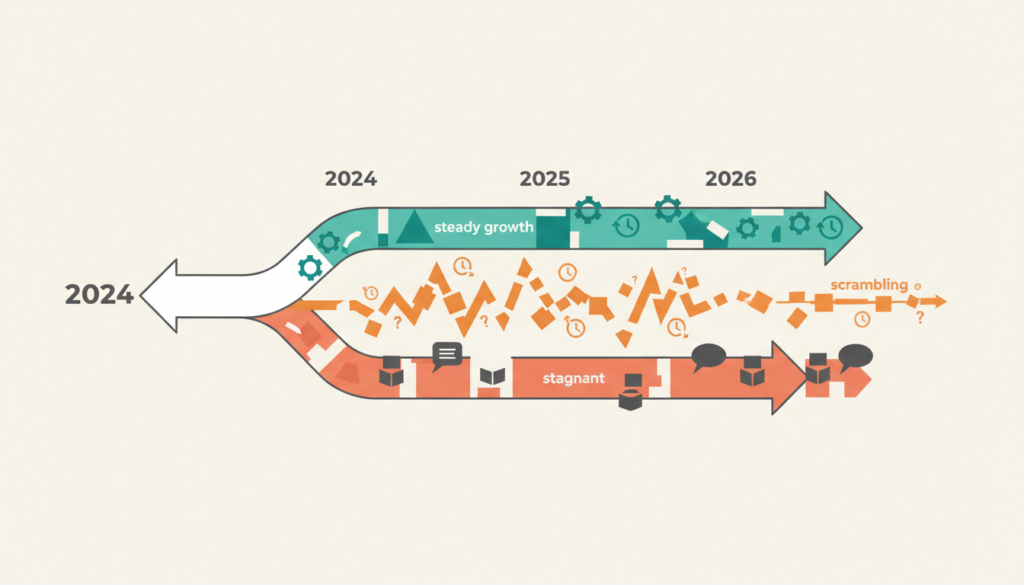
The teams that treated GEO as a buzzword in 2024 are now scrambling. The teams that built processes in 2025 are compounding their advantage. Every month you spend debating definitions is a month your competitors spend earning citations.
Generative search adoption is accelerating. Enterprise buyers, consumers, and researchers use AI answers daily. The brands cited in those answers gain trust and traffic that traditional search cannot replicate.
The playbook exists. The tools are available. The only variable is whether you execute now or explain later why you waited.




More Stories
HR Software: Essential Tools for Building a More Efficient Workplace
How Online Video Download Tools Work Behind the Scenes
How Early Investments Can Grow Into Lasting Financial Security