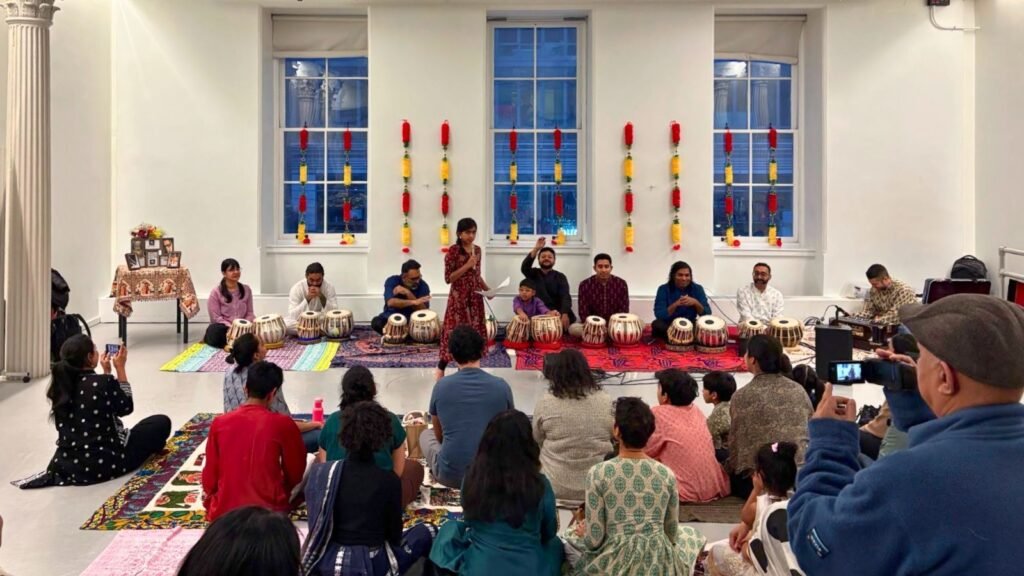
The tabla, one of the most iconic instruments in Indian classical music, has a history that spans several centuries. Its distinctive sound, characterized by crisp strokes and resonant bass tones, makes it both a rhythmic foundation and a melodic partner in performance. Understanding the role of tabla in Indian classical music involves exploring its techniques, traditional pedagogy, ensemble integration, and performance practice. For Western students seeking a structured approach to learning this instrument, Tabla classes NYC offer a bridge between rigorous conservatory-style training and traditional Indian methods.
Origins and Significance
The tabla evolved from earlier percussive traditions in India, including the pakhawaj and other hand drums used in northern Indian music. Traditionally associated with Hindustani classical music, the tabla consists of two drums: the smaller “dayan” (right-hand drum) made of wood, and the larger “bayan” (left-hand drum) made of metal, clay, or a combination of materials. Each drum produces a wide palette of sounds depending on hand placement, finger technique, and applied pressure, allowing the musician to articulate intricate rhythmic patterns known as “tala.”
Beyond its sonic versatility, the tabla holds cultural significance in religious, folk, and classical contexts. Its rhythms are considered a form of spiritual expression, linking musicians and listeners to centuries of musical lineage. For Western conservatories or structured curriculum programs, understanding this cultural dimension is essential for a holistic education in the instrument.
Technical Foundations
Tabla technique is highly codified, making it ideal for structured study. Students begin with basic strokes, known as “bols,” which are fundamental building blocks of rhythm. Each bol corresponds to a distinct sound and is executed with specific finger or hand motions. Key examples include “Na,” “Tin,” “Dha,” and “Ge,” each contributing to either melodic resonance or percussive clarity.
Progression in tabla training typically involves mastering these strokes in isolation, then combining them into short rhythmic phrases, or “thekas.” This stepwise progression allows students to internalize complex timing while developing hand coordination and tonal control. Advanced techniques include subtle modulation of pressure on the bayan for bass effects, rapid-fire rolls known as “kata,” and improvisational sequences called “tukras” and “relas.” Such techniques demonstrate the tabla’s ability to balance strict rhythmic discipline with expressive freedom.
For Western learners, attending structured Tabla classes NYC can provide guidance on proper hand positioning, stroke articulation, and practice regimen. These programs often incorporate graded levels similar to Western conservatories, ensuring systematic skill development.
Ensemble Integration
In Indian classical performance, the tabla is rarely a solo instrument in its initial stages; rather, it functions within an ensemble, accompanying melodic instruments such as the sitar, sarod, or flute, and vocalists performing khayal or thumri. Here, the tabla assumes both supportive and interactive roles. It provides the underlying rhythmic framework while responding to melodic phrases through improvisation and dynamic variation.
A critical aspect of ensemble performance is “layakari,” or rhythmic interplay. Tabla players engage in sophisticated dialogue with soloists, accentuating rhythmic cycles, introducing syncopations, and sometimes challenging the performer to respond in real time. Learning this skill requires not only technical proficiency but also acute listening and a deep understanding of tala structures. Conservatory-style curricula in Tabla classes NYC emphasize ensemble awareness, often pairing students with other instrumentalists or singers to cultivate this interactive competency.
Pedagogy and Tradition
Traditional tabla pedagogy is rooted in the guru-shishya system, where knowledge is transmitted orally from teacher to student over many years. Modern Western approaches often combine this immersive mentorship with structured lesson plans, notation systems, and practice schedules. A conservatory-style curriculum introduces students to rhythmic theory, tala notation, and structured improvisation exercises, while maintaining the oral and aural traditions that define Indian classical music.
Progression through tabla study is typically measured by skill in executing increasingly complex compositions, the ability to maintain steady tempo, improvisational agility, and the capacity to accompany various melodic forms. Instructors in Tabla classes NYC often incorporate graded recitals and workshops to provide students with performance experience, mirroring Western music education methods.
Performance Practice
Tabla performance ranges from solo recitals to accompaniment in large-scale concerts. Solo tabla performances showcase improvisational mastery through compositions like kaidas, tukras, and relas, demonstrating both technical dexterity and expressive nuance. When accompanying, tabla artists focus on enhancing the melodic content while maintaining rhythmic integrity. This dual capability makes tabla a versatile instrument, equally suitable for traditional classical concerts and contemporary fusion projects.
Performance etiquette, another critical aspect of training, includes maintaining composure, respecting the performance space, and understanding the aesthetic and spiritual dimensions of music-making. Western conservatory programs integrate these principles into their curriculum, emphasizing not only technical proficiency but also artistic presentation.
Integration with Western Pedagogy
A key advantage of structured tabla education in urban centers like New York is the integration of Indian classical techniques into a conservatory-style framework. Students gain exposure to systematic curriculum design, ensemble practice, and performance assessment while respecting the centuries-old traditions of the instrument. This dual approach equips learners to perform in diverse contexts—whether in Indian classical concerts, cross-cultural collaborations, or contemporary experimental music projects.
For those interested in pursuing this structured pathway, Tabla classes NYC provide a unique combination of tradition and modern pedagogy. Through progressive lessons, carefully sequenced exercises, and performance opportunities, students develop technical skill, musical sensitivity, and ensemble competence in a manner comparable to Western instrumental training.
Conclusion
The tabla occupies a central role in Indian classical music, bridging rhythm, melody, and improvisation in ways that few other instruments can. Mastery of the instrument requires dedication to technique, immersion in tradition, and disciplined practice, ideally within a structured curriculum that balances tradition with pedagogical clarity. For Western students, enrolling in Tabla classes NYC offers an opportunity to engage deeply with this rich musical heritage while benefiting from conservatory-style guidance. By understanding the tabla’s techniques, traditions, and performance practices, students can contribute meaningfully to both Indian classical music and contemporary cross-cultural ensembles, ensuring the instrument’s enduring relevance in a global musical landscape.


More Stories
The Benefits of Basic Piano Lessons for Brain Development
A Complete Guide to Youth Basketball Leagues: Structure, Divisions, and Key Competitions
Can South Africans Teach English Online with a TEFL Certificate? Here’s the Truth