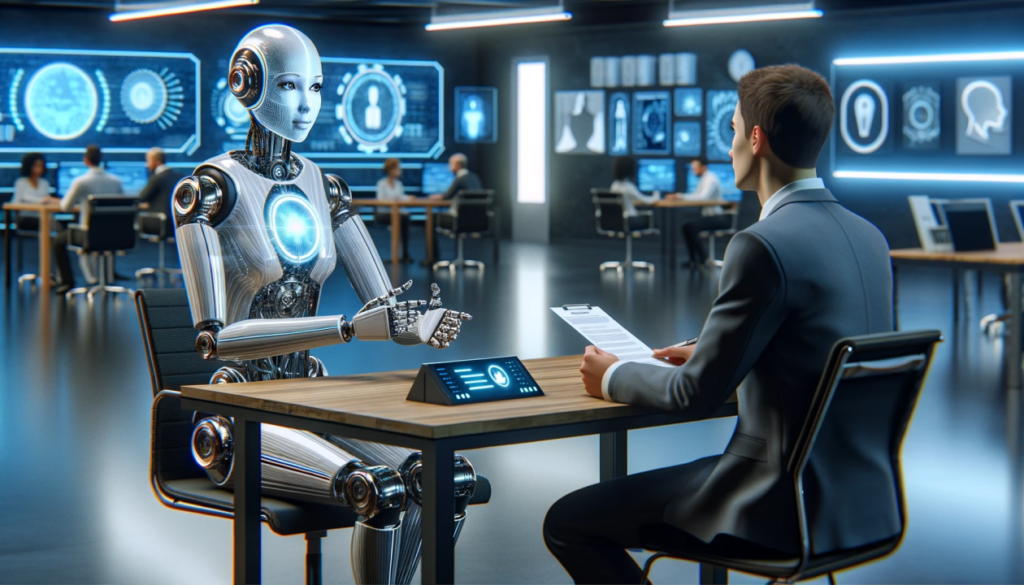
Finding highly specialized professionals can be one of the most challenging tasks for modern companies. Traditional recruitment methods often depend on manual resume reviews, job board searches, networking, and lengthy screening processes. While these approaches can still be useful, they may become inefficient when organizations need candidates with uncommon technical skills, industry experience, or highly specific qualifications.
AI recruiters are changing how companies approach this challenge. By using artificial intelligence to analyze candidate information, identify relevant skills, and improve sourcing strategies, businesses can discover specialized talent more efficiently. The growing role of artificial intelligence recruiting is helping recruitment teams handle large talent pools while focusing more attention on qualified candidates.
Understanding AI Recruiters
AI recruiters are software systems designed to support different stages of the hiring process. They can analyze resumes, identify relevant skills, search candidate databases, assist with candidate matching, and automate repetitive recruitment tasks.
Instead of replacing human recruiters completely, these systems are generally used as support tools. They can process large amounts of information quickly, allowing recruitment professionals to spend more time communicating with candidates, evaluating cultural fit, and making informed hiring decisions.
For specialized positions, this assistance can be particularly valuable because the candidate pool may be relatively small.
Why Specialized Talent Is Difficult to Find
Limited Candidate Pools
Some positions require combinations of skills that are uncommon in the broader workforce. A company might need an engineer with experience in a particular technology, knowledge of a specific industry, and several years of project leadership experience.
Traditional searches can make it difficult to identify people who satisfy several requirements simultaneously.
Complex Job Requirements
Specialized roles often contain detailed technical terminology. A recruiter without extensive knowledge of a particular field may overlook a qualified candidate simply because the candidate describes their experience using different terminology.
AI-powered recruiting systems can analyze relationships between skills, experience, qualifications, and job requirements, helping recruiters discover potentially relevant candidates.
Time-Consuming Screening
Reviewing hundreds or thousands of applications manually requires considerable time. Recruiters may need to examine employment history, education, technical abilities, certifications, and other information before deciding whether a candidate should move forward.
Automation can reduce the amount of repetitive screening involved in this process.
How AI Recruiters Identify Specialized Candidates
Intelligent Candidate Matching
One important capability of AI recruitment technology is candidate matching. Instead of relying exclusively on exact keyword matches, advanced systems can evaluate the broader context of a candidate’s experience.
For example, a candidate may not use exactly the same wording as a job description but could possess closely related skills. AI systems can help identify these connections and bring potentially suitable candidates to the recruiter’s attention.
This can expand the search beyond obvious keyword matches.
Resume and Profile Analysis
AI tools can process candidate resumes and professional profiles at scale. They can extract information such as skills, job history, certifications, education, industries, and areas of expertise.
Recruiters can then use this structured information to identify people who meet the requirements of highly technical or specialized positions.
Skills-Based Searching
Specialized hiring increasingly focuses on skills rather than job titles alone. Two professionals may have different job titles while possessing many of the same capabilities.
AI recruiting platforms can analyze skills and related experience, helping organizations search for talent based on what candidates can actually do rather than relying entirely on previous job titles.
The Role of Artificial Intelligence Recruiting in Talent Sourcing
Artificial intelligence recruiting can make talent sourcing more systematic. Recruiters can define requirements and use technology to analyze available candidate information against those requirements.
For example, a company searching for a cybersecurity specialist might consider knowledge of specific security frameworks, programming languages, cloud environments, certifications, and previous security projects.
AI tools can help organize these requirements and identify candidates with combinations of relevant qualifications.
Discovering Passive Candidates
Not every qualified professional is actively applying for jobs. Many specialized professionals are already employed and may only consider opportunities that closely match their career goals.
AI-supported sourcing can help recruiters identify passive candidates whose experience appears relevant to a particular position.
This gives companies access to a broader talent pool instead of depending exclusively on active applicants.
Improving Recruitment Efficiency
Automating Repetitive Tasks
Recruiters spend significant amounts of time on administrative activities. Sorting resumes, organizing candidate information, sending initial communications, and scheduling interviews can consume valuable working hours.
AI tools can automate portions of these tasks, allowing recruitment teams to concentrate on higher-value responsibilities.
Faster Candidate Shortlisting
When a specialized role receives many applications, recruiters need a practical way to identify candidates for further review.
AI systems can analyze predefined requirements and create organized candidate shortlists. Human recruiters can then review these recommendations and determine which candidates should continue through the process.
The final decision remains important because automated systems may not understand every contextual factor surrounding a candidate’s experience.
Supporting Better Candidate Experiences
Recruitment technology can also influence the candidate experience. Automated communication systems can provide updates, answer common questions, and help candidates understand different stages of the recruitment process.
For specialized professionals who may receive multiple opportunities, clear and timely communication can make the hiring process easier to navigate.
However, companies should ensure that automation does not make recruitment feel impersonal. Human interaction remains important when discussing career goals, responsibilities, compensation, company culture, and technical expectations.
Maintaining Human Oversight
AI recruiters are powerful tools, but they should not be treated as independent decision-makers.
Recruitment teams should regularly review how AI systems evaluate candidates and ensure that hiring criteria are relevant to the position. Human recruiters can investigate unusual results, consider information that software may overlook, and communicate directly with candidates.
Monitoring for Bias
AI systems can reproduce problems that exist in the data or processes used to develop them. Organizations should therefore monitor recruitment systems for potential unfair patterns.
Regular evaluation, transparent criteria, human review, and appropriate governance can help companies use AI responsibly.
Building a Modern Specialized Hiring Strategy
Companies can get more value from AI recruiting by combining technology with a clear hiring strategy. The process should begin with an accurate understanding of the role.
Recruiters should identify essential technical skills, preferred experience, certifications, behavioral requirements, and other legitimate job-related criteria.
AI can then help organize and analyze candidate information according to those requirements.
Combining Technology With Recruiter Expertise
The most effective recruitment process can involve cooperation between AI systems and experienced professionals. Technology provides speed, organization, and large-scale analysis, while recruiters provide judgment, communication, context, and relationship management.
This combination can be especially useful when hiring for difficult-to-fill positions.
The Future of Specialized Talent Acquisition
As AI technology continues to develop, recruitment systems are likely to become increasingly capable of understanding skills, career histories, and job requirements.
Companies may use AI to create more detailed talent maps, identify emerging skill shortages, discover candidates with transferable abilities, and build stronger talent pipelines.
The future of artificial intelligence recruiting is therefore not simply about automating recruitment. It is about helping organizations understand their talent markets and connect specialized professionals with opportunities more efficiently.
Conclusion
AI recruiters are becoming valuable tools for companies searching for specialized talent. Through intelligent candidate matching, skills-based searching, resume analysis, automated workflows, and passive candidate discovery, AI can reduce repetitive recruitment work and help organizations explore broader talent pools.
However, successful recruitment still depends on human involvement. Recruiters must evaluate candidates in context, communicate effectively, monitor automated systems, and ensure that hiring decisions remain based on relevant and appropriate criteria.
When implemented thoughtfully, AI-supported recruitment can give companies a more organized approach to finding professionals with the specialized skills needed for increasingly complex roles.



More Stories
How an AI Agency for Automation Can Modernize Outdated Processes
HR Software: Essential Tools for Building a More Efficient Workplace
How Online Video Download Tools Work Behind the Scenes