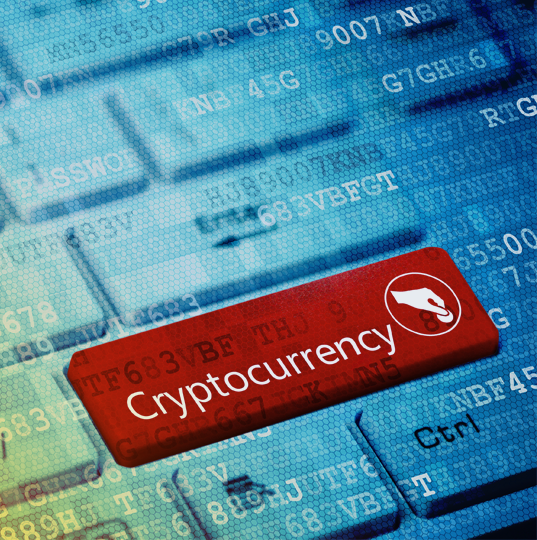
Understanding Blockchain Forensics in the Modern Digital Era
Blockchain technology was originally designed to be transparent, decentralized, and tamper-resistant. However, the same features that make blockchain powerful also make it attractive for illicit activities such as money laundering, ransomware payments, fraud schemes, and darknet marketplaces. This is where Blockchain Forensics plays a critical role in modern cybersecurity and financial investigation.
Blockchain Forensics refers to the process of analyzing, tracking, and interpreting blockchain transactions to identify patterns, trace funds, and uncover the real-world identities behind wallet addresses. Unlike traditional banking systems, where intermediaries hold transaction records, blockchain systems store every transaction publicly on a distributed ledger. Investigators leverage this transparency to follow the digital money trail across multiple wallets, exchanges, and networks.
As digital currencies continue to grow in adoption, Blockchain Forensics has become an essential tool for law enforcement agencies, compliance teams, and cybersecurity experts.
How Blockchain Transactions Work and Why They Can Be Traced
To understand Blockchain Forensics, it is important to first understand how blockchain transactions function. Every transaction made using cryptocurrencies like Bitcoin or Ethereum is recorded on a public ledger. Each record includes a sender address, receiver address, timestamp, and transaction amount.
Although blockchain addresses are pseudonymous rather than directly linked to real identities, they are not completely anonymous. Once a wallet address is linked to a known entity—such as a cryptocurrency exchange, merchant, or individual—it becomes possible to trace its entire transaction history.
Blockchain Forensics experts take advantage of this structure by mapping transaction flows. Even when criminals attempt to hide funds through complex methods like mixing services or chain-hopping, the underlying ledger still preserves a permanent record of movement.
Core Techniques Used in Blockchain Forensics Investigations
Blockchain investigators rely on advanced analytical techniques to uncover hidden financial activity. One of the most common methods in Blockchain Forensics is transaction graph analysis. This technique visualizes wallet interactions as nodes and edges, allowing investigators to identify clusters of related addresses.
Another key technique is clustering analysis. Many blockchain addresses are controlled by the same entity, and forensic tools can group them together based on behavioral patterns, repeated interactions, and transaction timing.
Heuristic analysis is also widely used. This involves identifying patterns such as “change address detection,” where leftover funds from a transaction are sent back to a sender-controlled wallet. These patterns help investigators link multiple addresses to a single user.
Additionally, timing analysis can reveal suspicious behavior. For example, rapid movement of funds across multiple wallets or exchanges often indicates attempts to obscure transaction origins.
Through these methods, Blockchain Forensics enables analysts to reconstruct financial trails that criminals believed were untraceable.
Tools and Technologies Powering Blockchain Forensics
Modern Blockchain Forensics relies heavily on specialized software and AI-driven platforms. These tools are designed to analyze massive amounts of blockchain data in real time and generate actionable insights.
Blockchain explorers are the most basic tools, allowing users to manually view transaction histories. However, professional forensic investigations use more advanced platforms that integrate machine learning and data visualization.
These tools can automatically flag suspicious wallets associated with ransomware attacks, darknet marketplaces, or fraud rings. They can also trace funds across multiple blockchains, including Bitcoin, Ethereum, Binance Smart Chain, and others.
Artificial intelligence plays an increasingly important role in Blockchain Forensics by detecting anomalies that would be impossible for humans to identify manually. AI models can predict risk scores for wallets and identify potential links between seemingly unrelated transactions.
Real-World Applications of Blockchain Forensics
Blockchain Forensics is not just a theoretical field; it has practical applications across law enforcement, finance, and cybersecurity.
Law enforcement agencies use Blockchain Forensics to investigate cybercrime cases involving ransomware attacks. When victims pay ransom in cryptocurrency, investigators track the funds as they move through wallets and exchanges, often leading to the identification of criminal groups.
Financial institutions also rely on Blockchain Forensics for compliance and anti-money laundering (AML) regulations. Cryptocurrency exchanges must verify the source of funds to prevent illegal activity on their platforms. Forensic analysis helps them flag suspicious transactions before they are processed.
In addition, cybersecurity firms use Blockchain Forensics to monitor stolen funds from hacking incidents. When crypto assets are stolen from exchanges or wallets, forensic experts attempt to trace and freeze the funds before they are converted into fiat currency.
Challenges Faced in Blockchain Forensics Investigations
Despite its effectiveness, Blockchain Forensics faces several challenges. One major issue is the use of privacy-enhancing technologies such as coin mixers and tumblers. These services mix multiple transactions together, making it difficult to trace the original source of funds.
Privacy-focused cryptocurrencies like Monero and Zcash also pose significant challenges because they use advanced encryption techniques that hide transaction details entirely.
Cross-chain transactions further complicate investigations. Criminals often move funds between different blockchain networks to obscure their trail. This requires forensic tools capable of analyzing multiple blockchains simultaneously.
Another challenge is jurisdictional limitation. Cryptocurrency transactions are global, but law enforcement agencies operate within national borders. Coordinating international investigations can slow down the tracing process.
Despite these challenges, continuous improvements in Blockchain Forensics tools are making it increasingly difficult for criminals to remain hidden.
The Future of Blockchain Forensics and Digital Investigation
The future of Blockchain Forensics is expected to be shaped by advancements in artificial intelligence, regulatory frameworks, and global cooperation. As blockchain adoption grows in industries such as banking, supply chain, and healthcare, the demand for forensic transparency will increase.
AI-powered Blockchain Forensics systems will become more predictive rather than reactive, identifying suspicious activity before it escalates into full-scale fraud or cybercrime. Real-time monitoring systems will likely become standard for cryptocurrency exchanges and financial institutions.
Governments around the world are also developing stricter regulations for cryptocurrency usage. These regulations will require stronger Know Your Customer (KYC) and Anti-Money Laundering (AML) compliance, making Blockchain Forensics an integral part of financial ecosystems.
In the long term, Blockchain Forensics will continue to evolve as a bridge between decentralized finance and regulatory oversight, ensuring that blockchain technology remains secure, transparent, and trustworthy.
Conclusion
Blockchain Forensics is a powerful discipline that transforms the transparency of blockchain technology into a tool for accountability and justice. By analyzing transaction patterns, tracing wallet activities, and leveraging advanced AI tools, investigators can uncover hidden financial movements across the digital ledger.
As cryptocurrency usage expands globally, Blockchain Forensics will remain essential in combating cybercrime, ensuring regulatory compliance, and maintaining trust in digital financial systems.
More Stories
High Purity Nitrogen and Suitable Supply Equipment
Bulk Buying 101: How to Stock Wholesale Water Guns That Sell Out Fast
Why Serving Others Is the Foundation of Exceptional Leadership